

I’m a Cal Newport fan. Pretty much any time I write a book summary on this blog, it’s one of his books. This blog post covers his latest book, Slow Productivity, with my personal opinions sprinkled throughout.
Cal Newport’s premise is that knowledge workers are overwhelmed with competing obligations and interruptions. Stress is high and hours are long, but valuable output is low.
To address the trap of modern knowledge work, he presents the concept of slow productivity:
A philosophy for organizing knowledge work efforts in a sustainable and meaningful manner, based on the following three principles:
1. Do fewer things.
2. Work at a natural pace.
3. Obsess over quality.
I would add that the rise of hustle culture, LARPing, and AI slop cannons has not helped. If anything, these developments have glorified the idea of spinning your wheels with nothing to show for it.

I agree that knowledge work needs a reframing. Slow productivity isn’t about being lazy or wasting time. Rather, it’s a way to preserve your focus and energy, so you can go hard on the few things that matter.
For each principle, I’ll summarize Cal Newport’s advice and add my own thoughts.
Principle 1: Do Fewer Things
Strive to reduce your obligations to the point where you can easily imagine accomplishing them with time to spare. Leverage this reduced load to more fully embrace and advance the small number of projects that matter most.
Cal’s Propositions
Limit how much you attempt to do. Have one main goal per day. Keep at most 3 missions at a time. (The fewer the better.)
Protect your time. Automate or eliminate menial tasks. Throw money at the problem if you have to. Schedule your time. Do not let other people claim your time for free.
Maintain a backlog of work and pull from it, rather than allowing new tasks to be thrust upon you. That way you only focus on what’s next on your plate.
Andrew’s Commentary
Working smart beats working hard. My college days are an example: I spent more time playing League of Legends than I spent studying. But when I studied, I focused hard. Come graduation time, my stress was low, but my grades and career prospects were high.
Everything has an opportunity cost. Stretching yourself too thin means nothing gets done. This is also the thesis of Essentialism: you should focus harder on fewer things.
If you don’t prioritize, others will prioritize for you. The Eisenhower Matrix distinguishes between important work and work that’s merely “urgent.” Most incoming requests appear urgent but don’t actually matter. Have the discipline to say no.
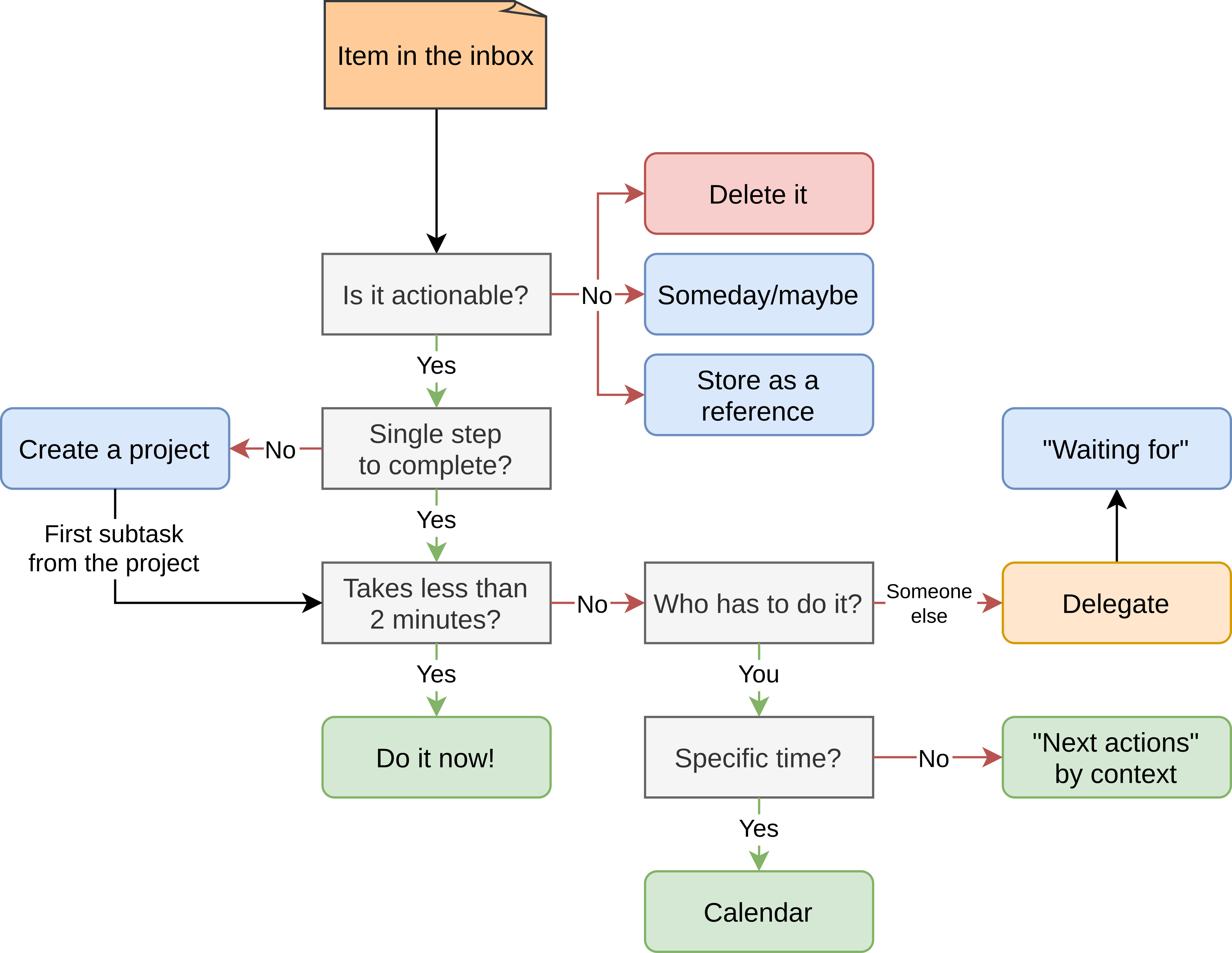
The advice matches the Getting Things Done system. The gist of it is to triage incoming tasks and focus only on what’s next. I use GTD in my own life and automate almost everything with Todoist.
Principle 2: Work at a Natural Pace
Don’t rush your most important work. Allow it instead to unfold along a sustainable timeline, with variations in intensity, in settings conducive to brilliance.
Cal’s Propositions
Give yourself permission to take longer and miss “deadlines.” Your timelines should be generous enough to be clearly attainable. Most people tend to estimate that a project will take half the time it actually needs.
Embrace seasonality in your schedule. Knowledge work is cyclical; you need periods of rest. So incorporate sabbaticals, schedule focus blocks, and modulate the intensity throughout your day/week/month/year.
Curate your environment. Having a working space with good vibes makes a difference. Set rituals to connect and disconnect from work, so you can get in (and out of) a flow state.
Andrew’s Commentary
“Work like a lion, not like a cow.” Progress is rarely uniform. Bursts of great work can accomplish more than consistent mediocre work. So you’re better off resting and recharging in service of doing your best work.
Speed can compromise quality and long-term progress. If moving “faster” lowers the quality bar or makes you reckless, you may create more work—or set yourself back—in the long run.
Unrealistic timelines lose credibility. It’s tempting to set aggressive deadlines to manufacture pressure. It might improve velocity, but if a goal is unrealistic, people stop taking it seriously. Why try hard when it doesn’t change the outcome?
Procrastination isn’t necessarily bad. In Adam Grant’s TED Talk about the Warby Parker founders, Grant notes that strategic procrastination can buy time for ideas to incubate. The key was that they were quick to start but slow to finish.
Principle 3: Obsess over Quality
Obsess over the quality of what you produce, even if this means missing opportunities in the short term. Leverage the value of these results to gain more and more freedom in your efforts over the long term.
Cal’s Propositions
Improve your taste. Invest time on the side to learn more about your craft (or the world in general). Similarly, build a community of like-minded individuals. A strong community helps you raise your standards.
Reject perfectionism. Progress is what matters. Give yourself enough time, but don’t give yourself unlimited time.
Bet on yourself and have skin in the game. Make your commitments public to maximize accountability. Be open to taking risks (both socially and financially).
Andrew’s Commentary
Finishing projects is more important than starting them. Starting lots of things without finishing them accomplishes nothing.
The world is becoming increasingly winner-take-all. Being incrementally better can yield disproportionately better results. As AI slop becomes more abundant, high-quality work becomes more valuable by comparison.
“Hire people who give a shit.” There is something meaningful about taking pride in your work. Life is too short to wallow in mediocrity. My former boss wrote a blog post around this very topic.
Parting Thoughts
Most people get productivity wrong. “Hustling” or “moving fast” can create the appearance of progress without producing meaningful results. Therefore, it’s better to value output over input.
I don’t think that “slow and steady wins the race.” Rather, being hasty and reckless loses the race. Slowing down is not the same as wasting time, nor is it an endorsement of mediocrity. It happens in service of making better decisions.
Productivity is also a long-term game. Therefore, you must focus on process over outcome. Bias toward action, but be patient with results. Outsized results come from sticking with a sound process long enough for it to compound. Cal Newport himself frames it well:
I work hard almost every day. But those days are rarely hard to get through. The distinction matters.
The multi-year project structure is the part that doesn't get enough attention. Most 'productivity' advice optimizes for the week, maybe the quarter. Slow productivity asks what you're actually trying to build over years — which changes what's worth doing today.
Do you have a book club or thought about making one?