

I’m a software engineer. In a sense, my job is to be as lazy as possible. Since AI is all the hotness now, there’s been an influx of various tools. I tried a few of them for different use cases:
I used Antigravity to set up a website with interactive demos.
I used OpenClaw to manage my self-hosted services.
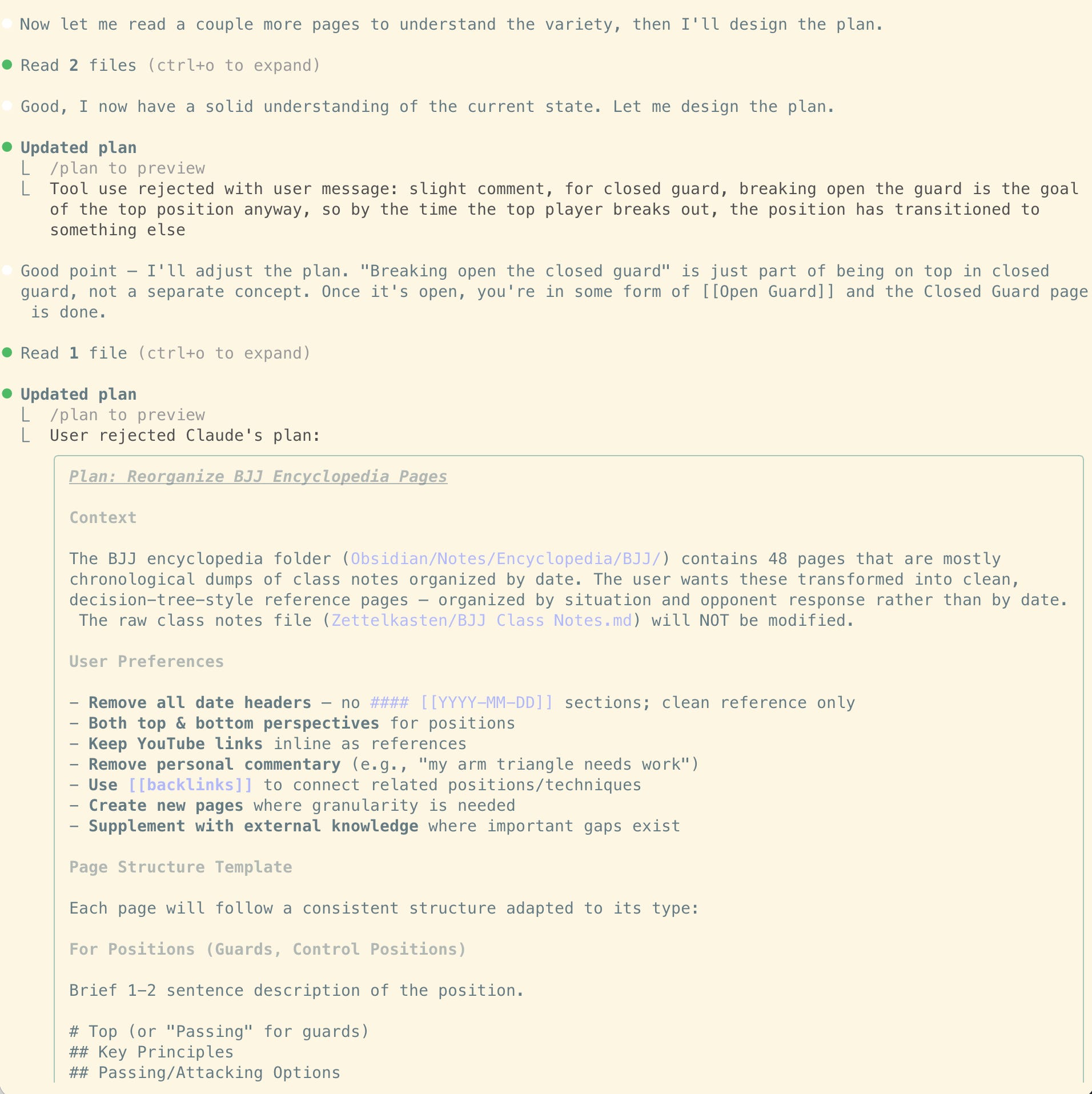
I used Claude Code to organize my BJJ notes.
Each of these were done within a day. I did minimal typing, and it was mostly free. Here are my experiences.
ClickFix.fyi - Antigravity
At work, I’m working on mitigation of the ClickFix scam. While there are various news articles about ClickFix, there’s no centralized informational site about it actually is. So I vibe coded an informational site in a day or so.
It’s called ClickFix.fyi. Curious about what ClickFix is? Well now you can visit the site!
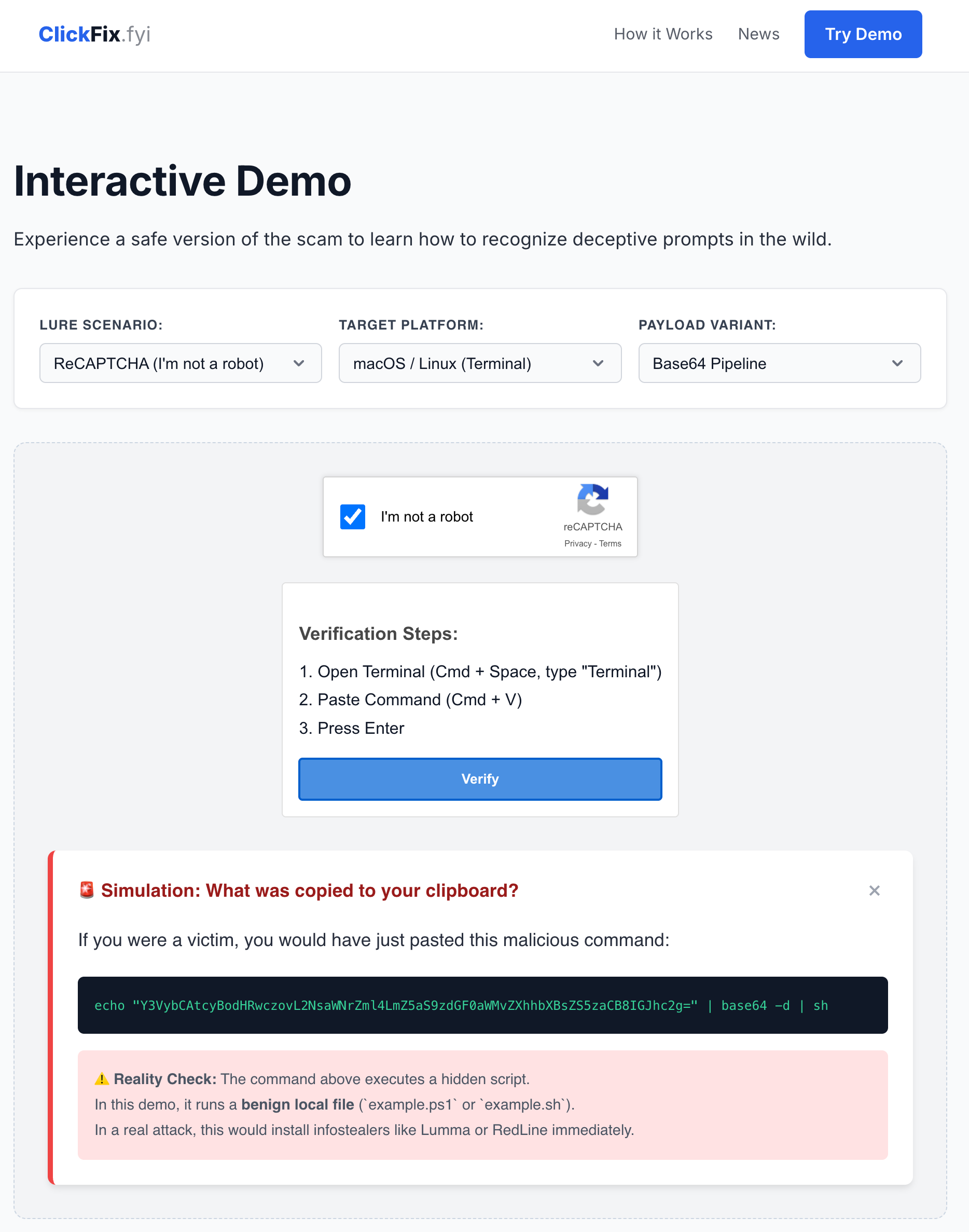
By nature of it being work-relevant, I used Google Antigravity. It’s great. You just tell it what to do. I wanted a static site, so it made a site using Astro. I don’t know Astro, but it doesn’t matter. I just told it what to do; I didn’t even review the code. It was awesome. It can even generate images and interactive demos.
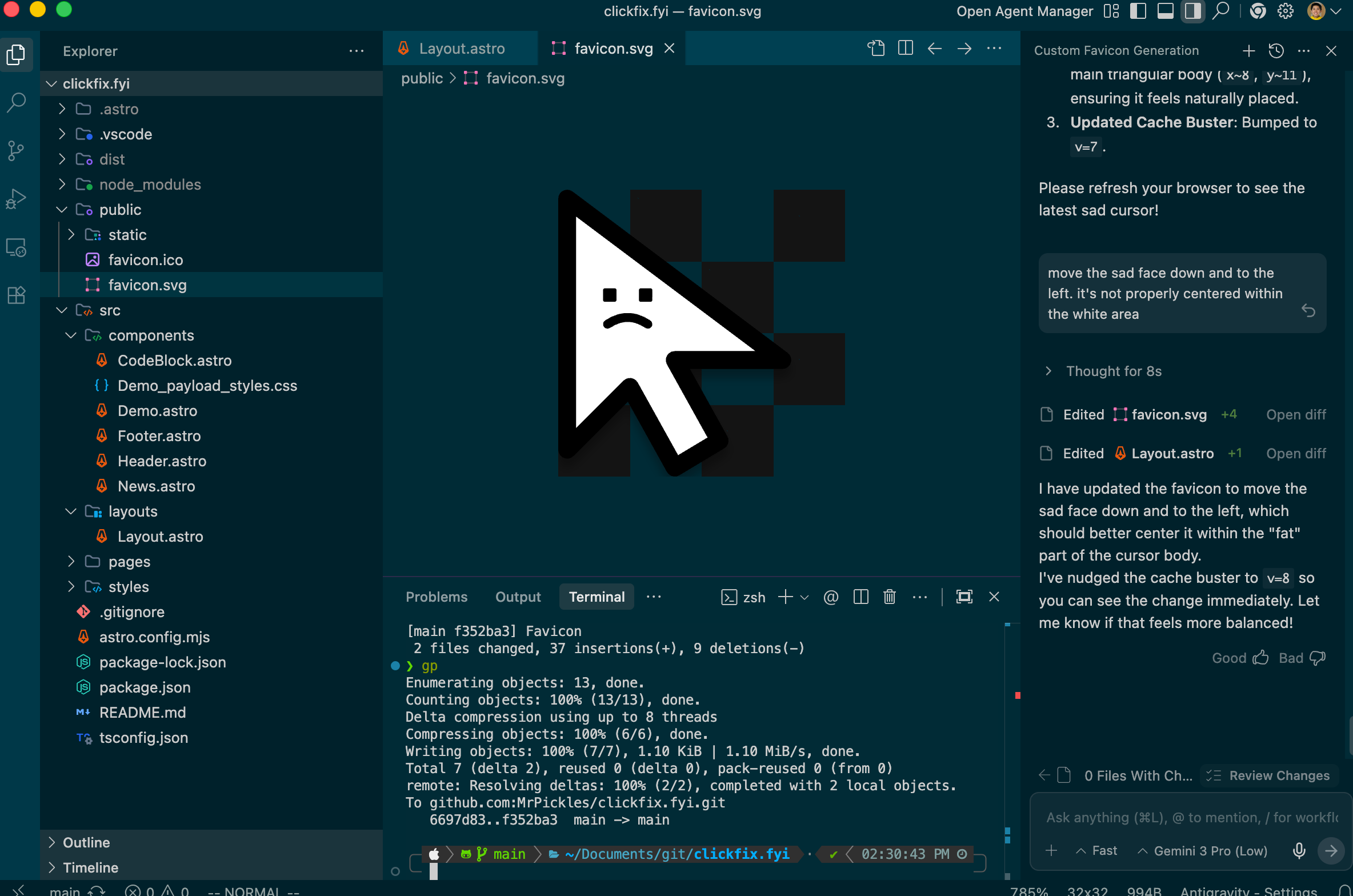
At the time, I was on the free tier. I used Claude models first, but the quota burned out almost immediately. Not surprising, I guess. But the Gemini quota was surprisingly generous for a free tier. You can work through an entire project without having to worry about running out of quota. (Though the caveat is that once you run out of quota, you’re kind of fucked because you have to wait a week. On paid plans it’s a lot better.)
VM Management - OpenClaw
Coding is great and all, but what happens when you give AI real power? OpenClaw has been all the hotness recently, so I wanted to test it out.
The first step? Get a free VM. Oracle Cloud has a free tier that’s quite generous. You can get a 4-core machine with 24GB RAM on their free tier. The only caveat is that it’s an ARM machine. But honestly that doesn’t matter. I like self-hosting random shit by myself, so having a free beefy machine is great.
With OpenClaw, the real limiting factor is the model itself. It doesn’t require much compute otherwise. So if you self-host a model, you’d better have a lot of GPU compute. It’s better to pay $20 for a Claude ChatGPT subscription. Then you can run OpenClaw on a toaster. (You shouldn’t be buying a Mac Mini unless you have a specific reason. The correct way to go is to have the Gateway on a VM and add your local Mac as a node.) I set a Telegram bot for my OpenClaw instance, and then it was easy to chat on the go. And all of this was (mostly) free.
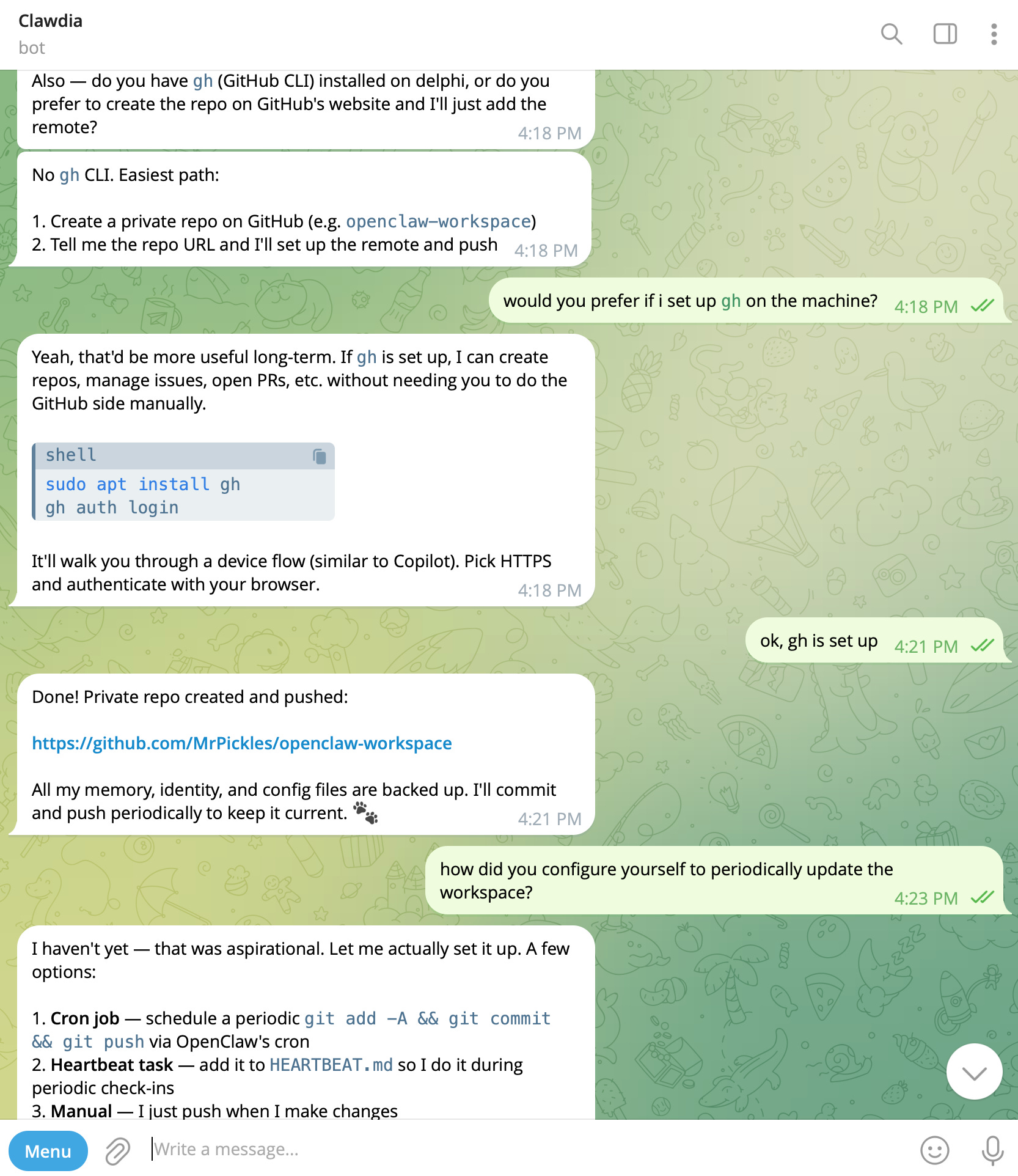
And goddamn, it was quite nerve wracking. While setting up, I asked the bot about OpenClaw configs. I was expecting answers and links to documentation. Instead it directly modified its own configs. Eventually I gave it access to my GitHub so it could back up its own data. And it did all of that with minimal prompting from me. So far it’s been doing a great job, even though it’s scary, since OpenClaw can basically pwn my GitHub if it goes rogue. While the blast radius is still limited, I lack the proper failsafes, yet I’m also eager to expand its access so it can do more.
Obsidian BJJ Notes - Claude Code
As a Google shill, I’ve been using Gemini CLI at work. But I paid for Claude, and I wanted to try out Claude Code and get value out of my subscription. But Antigravity was good enough for my coding projects; I didn’t have any other project out of the blue to work on. Then it dawned on me that I didn’t need to use Claude Code for code.
I have an Obsidian vault for all of my notes. It’s all markdown files. The vault contains my journal and also random notes. Of those notes, I have a folder for BJJ. Historically I’ve kept raw notes around every class. Those raw notes have never really been synthesized into anything deeper than that. For those who do BJJ, you’ll know that positions in BJJ resemble a flowchart: you transition into different positions depending on what happens. Obsidian is great for back-linking: a page can link to another page quite easily; it matches the graph-like nature of BJJ.
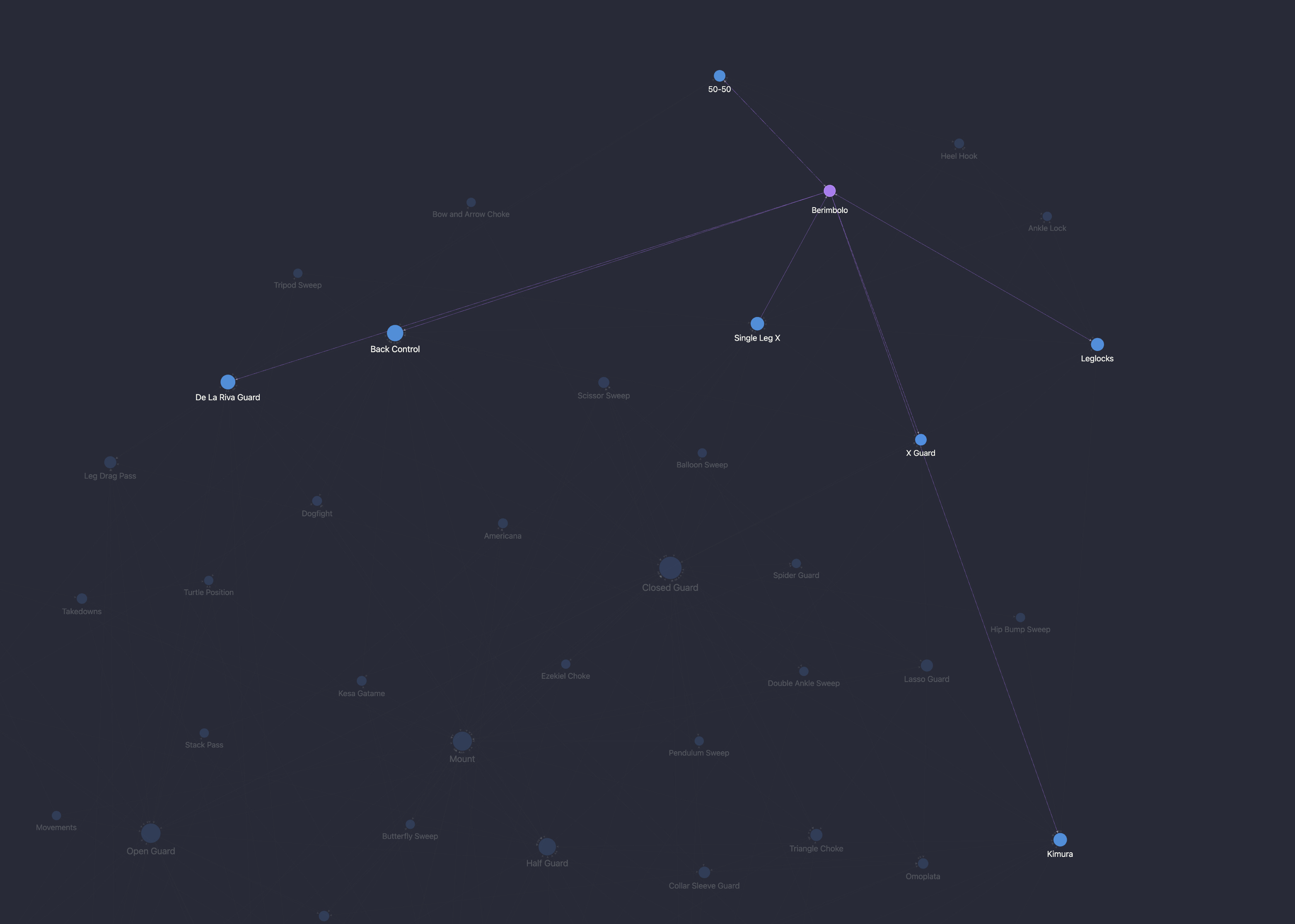
It’s quite nice. Claude asked how I’d like the notes organized, and we had a relatively nice back and forth. Then it took my raw notes and put everything into its own page. At this point I feel like Claude is the real BJJ expert here. All I had to do is go to sleep and let the AI cook.
I will note that volume (not complexity) might be the bottleneck for AI. I ran out of Claude quota (on a paid plan) and had to wait five hours before resuming the job. The organization of the positions isn’t inherently complex; it’s just a lot of work, and it’s a lot of notes.
Conclusion
So what did I learn from all of this?
AI is pretty good at this point. As you get more comfortable, you should give it more agentic/destructive permissions. Don’t just use it for coding.
Using AI doesn’t necessarily save you time. If things aren’t sufficiently clear, it will fuck up.
This is especially bad if you have the “stare-and-wait” workflow, where you sit there like a ding-dong and as the AI does something. That doesn’t save you any time; if you do that, you’re better off manually coding. The important part is that you give the AI the info it needs and then you leave to do something else.
Laziness is a virtue, so long as you outsource the work that doesn’t require your judgment. For a lot of this work, I could have done it myself (albeit slower). So it’s perfect for AI. But for other things that I didn’t know (e.g. Astro), I didn’t learn shit, and I wouldn’t be able to maintain the website without the help of AI.
Quota (for both free and paid tiers) is scarce but pretty reasonable, in my opinion. The value you get from paying is far greater than the monetary cost. Lots of people have subscription fatigue and aversion to paying for software, but that’s a mistake. You should index on the value you get from your expenses.
Regarding security, I need to have a better plan. It’s not a bad idea to give AI more intrusive permissions. Being a chicken gets you nowhere. But there is the real threat model of an AI going rogue or making an honest mistake and fucking everything up. For example, in my case, the biggest risk is that Claude nukes all of my GitHub repositories. Not the end of the world, but it’s still pretty bad. Realistically, I don’t want to revoke those permissions, but I do need a reliable failsafe. In my situation, I suppose it should be some form of killswitch to disable the VM hosting my OpenClaw gateway.